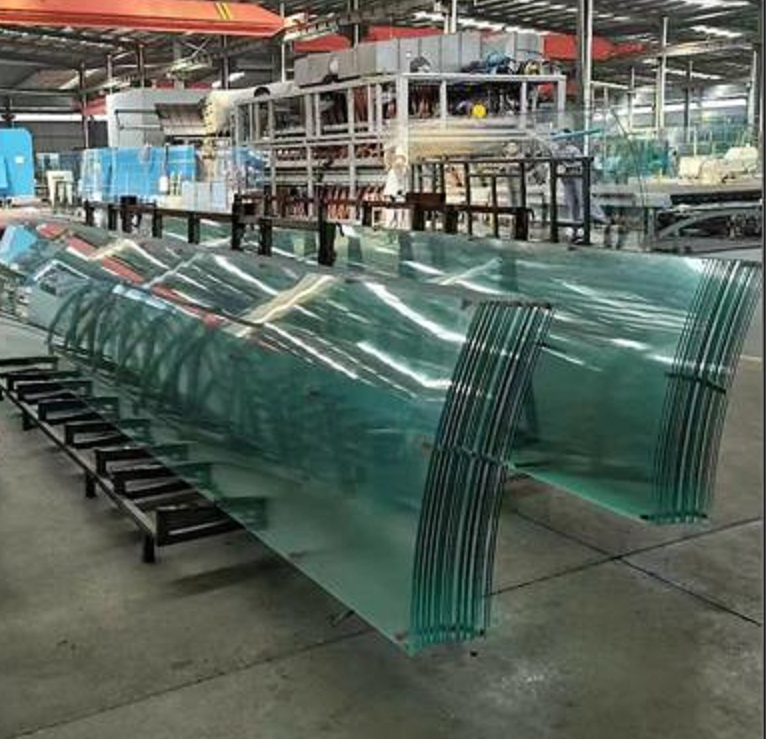
On the art glass line, the clock starts the moment the batch hits the furnace mouth. If preheat is slow or uneven, you stretch cycle time, risk thermal shock, and turn every pass into a roll of the dice. We built our infrared preheating module to cut that risk at the source. What matters under the hood We run NIR emitters tuned to match glass emissivity, so the energy goes straight into the sheet instead of heating the air around it. The heater face runs 600–750°C, delivering 25–40 kW/m² at the work surface, depending on the profile. It’s 400 V three-phase, and the array is modular: 300 mm or 600 mm elements, quick-connect terminals, and standard mounting centers so you can swap sections in without a major tear-out. A sealed quartz envelope and low-thermal-mass filaments give sub-second response, so the control can chase the setpoint without overshoot. Here’s why it behaves the way it does on the floor. You get a uniform thermal field across the sheet, which cuts thermal stress and keeps the first bend or slump within tolerance. Preheat time drops 30–45% compared with convection, so throughput rises without dumping extra heat into the shop. Energy use falls because the energy is actually going into the glass. In practice, that translates to fewer rejects from micro-cracks, more consistent sag, and a steadier pace. A few practical notes. Infrared preheating is line-of-sight. Keep emitter-to-glass distance controlled, and use guarding to block glare and radiant heat on nearby surfaces. Match the control to the process: a PID or closed-loop power controller with an IR pyrometer keeps hot spots from showing up and keeps the profile repeatable. Expect a short burn-in for the emitters to stabilize output; after that, run the array dry and clean, and inspect quarterly.