

Getting Your Voltage Right on Global Annealing Lines
If you’ve ever moved a production line across a border, you know the drill. The biggest headache isn’t the shipping—it’s the power. Glass is finicky. You need those thermal gradients just right to get rid of internal stress, or you’re looking at a lot of broken bottles. But here’s the real danger: if you plug a 110V lamp into a 480V system, it doesn’t just “not work.” It pops. Instantly. That’s why we build our infrared heaters to hit the three big global standards: 110V, 480V, and 575V. No guesswork.
The Trade-off Between Voltage and Heat
Here is how it works on the inside. When we move up to 480V or 575V, we change how we wind the filament. We make it longer and increase the resistance. This keeps the wattage where it needs to be without blowing your circuit. The upside? You can run way more lamps on a single power drop. It cleans up your wiring footprint and makes the whole furnace setup feel less cluttered. But keep an eye on your gear. High-voltage lamps put out some serious, concentrated heat. If your reflectors are pitted or slightly off-center, you risk overheating the quartz envelope. It happens faster than you’d think.
Picking the Right Parts
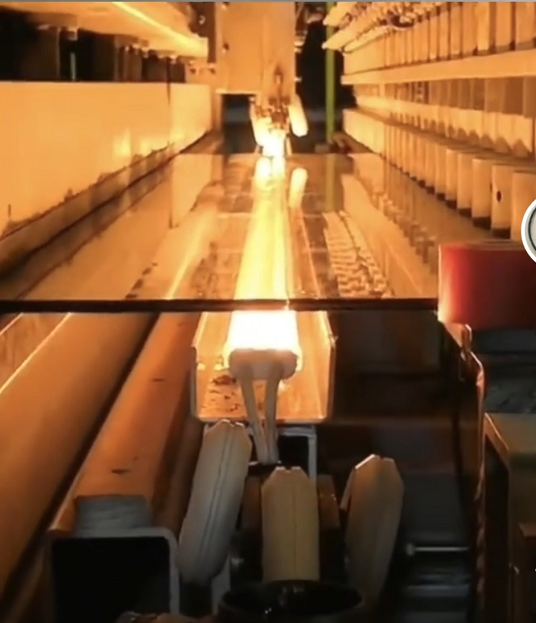
We use heavy-wall quartz because it can take the punch of rapid cycling without cracking. Depending on the shape of your bottles, you might want coated or uncoated tubes. If you’re dealing with thick glass bases, go with the coated ones. They shift the emission spectrum so the heat actually penetrates the glass instead of just bouncing off the surface. As for the connections, we don’t do “proprietary” nonsense. We stick to R7s or Sk15. They’re drop-in replacements. When a lamp finally gives out, you just swap it. No re-engineering sockets or messing around with new crimps.
The Reality of Installation
Getting the voltage right is a start, but it’s only half the battle. You have to make sure your controllers can actually handle the inrush current when those high-wattage arrays kick in. It’s a huge spike. To save you the stress, we give you the exact voltage and amperage draw for every custom length we make. That way, you can pick your breakers and contactors before the equipment even hits your floor. No surprises, no blown fuses on day one.